Fix: Parallax Effect Not Working on iPhone iOS 26

The parallax effect is a signature iOS feature that adds a subtle sense of depth to your Home Screen, making your icons and…

The parallax effect is a signature iOS feature that adds a subtle sense of depth to your Home Screen, making your icons and wallpaper appear to shift as you move your iPhone. With iOS 26, this effect has been updated, but you might find it’s not working correctly. Users have reported issues where the effect fails to load—sometimes getting stuck at a specific percentage like 22% before showing an error—or simply doesn’t activate at all, as described in this Apple Community discussion. This is typically caused by a software glitch from the update, a conflicting setting, or a temporary bug in the system’s interface manager.
Why the Parallax Effect Fails
The parallax effect relies on data from your iPhone’s motion sensors (the accelerometer and gyroscope) to detect its orientation and tilt. iOS uses this data to shift the background wallpaper slightly slower than the foreground app icons, creating the illusion of depth.
A failure in this system after an iOS update usually points to a software issue. The update process might have corrupted a display setting, or a new bug could be preventing the system process that manages the Home Screen (known as Springboard) from properly rendering the effect. In some cases, navigating to certain screens, like the widget gallery or App Library, can temporarily break the effect until the system is reset.
How to Fix the Parallax Effect Failure
These solutions are ordered from the simplest checks to more involved resets.
1. Ensure Reduce Motion is Disabled
This is the most common reason for the parallax effect not working. Reduce Motion is an accessibility feature specifically designed to turn off this and other motion effects to create a simpler visual experience.
- Go to Settings > Accessibility > Motion.
- Make sure the toggle for Reduce Motion is turned off.
2. Restart Your iPhone
A simple restart can fix temporary software glitches affecting the Home Screen’s rendering engine. This often restores the parallax effect if it stopped working after you visited the App Library or widget screen.
- Press and hold either volume button and the side button until the power‑off slider appears.
- Drag the slider to turn your iPhone off.
- After 30 seconds, press and hold the side button until the Apple logo appears.
A restart can also help fix home screen lag that sometimes interferes with visual effects.
3. Toggle the Display Zoom Setting
This less‑known trick forces iOS to completely reload the Home Screen interface, which can clear a stubborn glitch that a simple restart might not fix.
- Go to Settings > Display & Brightness.
- Scroll down and tap Display Zoom.
- Change the setting from Standard to Zoomed and tap Set. Your iPhone will restart.
- Once it’s back on, return to the same menu and switch it back to Standard.
4. Update to the Latest iOS Version
Visual bugs are common in the initial release of a major iOS update. Apple often releases follow‑up patches (e.g., iOS 26.0.1) to address these kinds of issues.
- Go to Settings > General > Software Update.
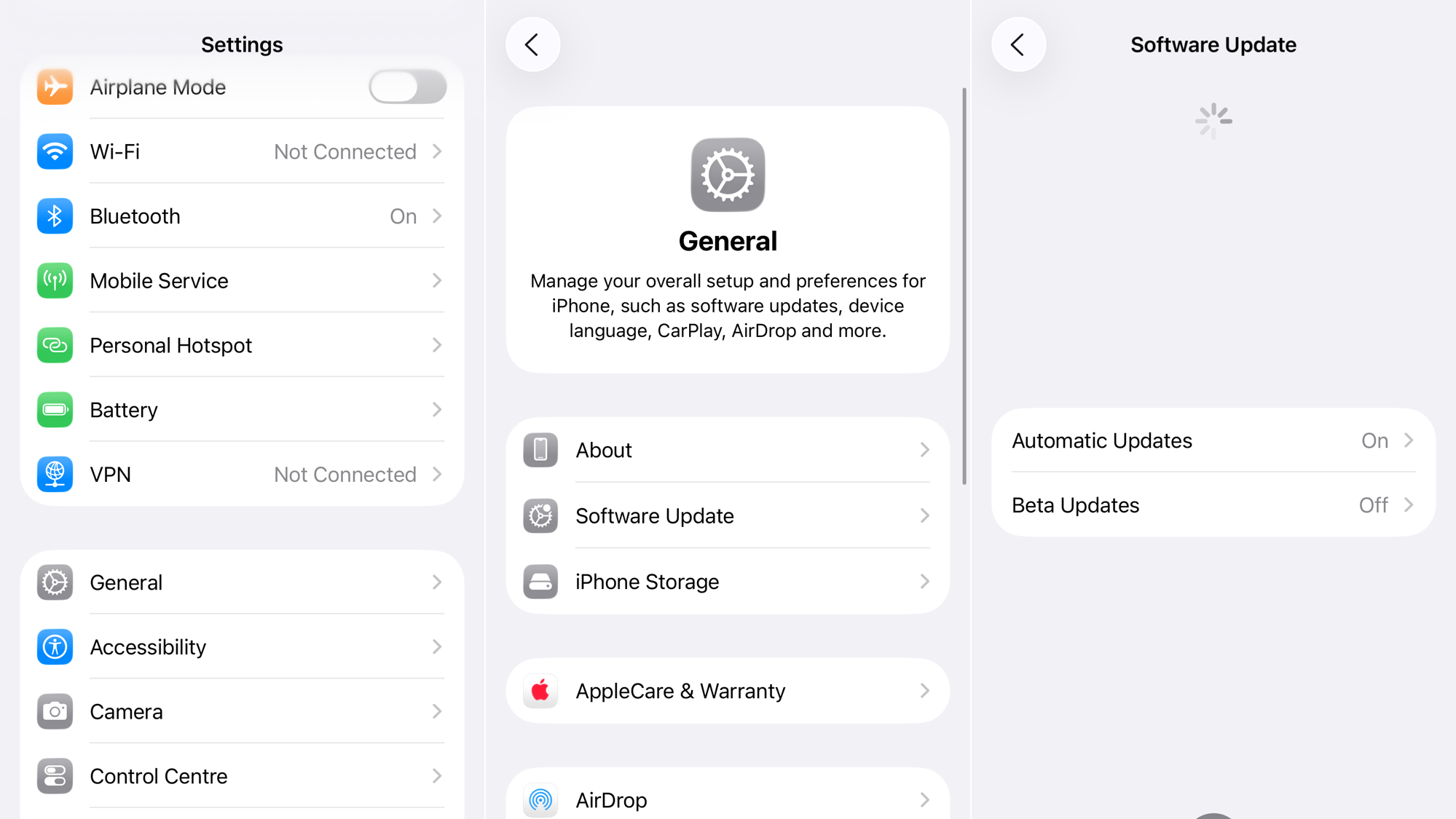
- If an update is available, tap Download and Install.
5. Re‑apply Your Wallpaper
The problem might be with the wallpaper file itself, especially if you’re seeing a loading error. Re‑selecting the wallpaper can often resolve this.
- Go to Settings > Wallpaper.
- Tap Add New Wallpaper.
- Choose the same photo or a new one and set it again, ensuring any perspective or motion effects are enabled in the preview.
While you’re customizing, you might also want to customize app icons for a fresh look that works well with the parallax effect.
6. Use a Compatible Spatial Scene Photo
The new “Spatial Scene” wallpaper is a more advanced parallax effect with specific requirements. It will only work on an iPhone 12 or newer and with a photo that has a clear foreground subject and background. When selecting a photo, tap the hexagon icon to enable the effect before setting it as your wallpaper.
To ensure the feature is active, go to Settings > Wallpaper and enable Spatial Scenes for supported images.
If none of these solutions work, contact Apple Support.